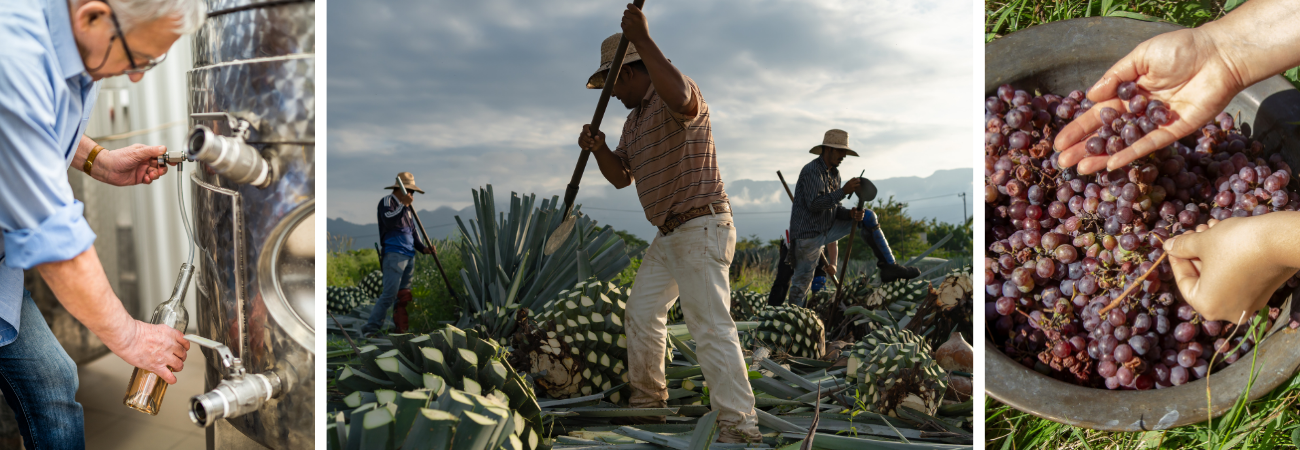
Provenance is central to premium drinks, connecting products to the places, ingredients and expertise behind them. As in the beauty industry, responsible sourcing involves both raw materials and packaging, with brands facing similar challenges around traceability, environmental impact and regulation. From agricultural ingredients to bottles and closures, premium drinks businesses need visibility of how their inputs are sourced and processed.
Positive Luxury’s guide, Responsible Sourcing in Luxury, sets out practical steps for assessing suppliers and strengthening sourcing decisions. For premium drinks, this means considering both the product and the packaging that brings it to market.
WHERE THE RISK IS CONCENTRATED
Packaging is one of the core sourcing challenges for premium drinks brands. Bottles, closures, labels and gift packaging each carry environmental impacts, and choosing between materials requires an understanding of their full lifecycle. Lifecycle assessments help brands identify where changes can make the greatest difference.
Regulation adds further complexity. Extended producer responsibility schemes, plastic taxes and labelling requirements can all affect packaging decisions. Brands selling internationally need to understand which requirements apply in each market and build these into their sourcing approach.
Agricultural supply chains present another challenge. Grapes, grain and botanicals may come from numerous growers and regions, making it difficult to maintain visibility back to source. Gaps in traceability can leave human rights risks unaddressed, while dependence on agricultural inputs exposes brands to climate and biodiversity risks in the landscapes where those ingredients are grown.
WHAT GOOD LOOKS LIKE
These are four key approaches brands can take:
- Use lifecycle assessments to measure packaging impacts and identify real opportunities to measurably reduce embodied carbon
- Design packaging for recyclability, and get ahead of regulation or market requirements
- Strengthen transparency by working with suppliers to understand the origins of agricultural inputs as well as enhance due diligence on human rights risks
- Support regenerative agricultural approaches to sourcing raw agricultural materials
INSPIRATIONAL CASE STUDIES
Planet of the Grapes has turned a waste stream into a resource: the company develops alternative leather materials from vineyard waste, demonstrating measurably lower-impact innovation built on traceable inputs rather than virgin material.
KEY TAKEAWAYS FOR PREMIUM DRINKS BRANDS
- Conduct a lifecycle assessment on your primary packaging format – bottles and closures are usually the biggest carbon lever in the product, start there before addressing secondary packaging
- Map your agricultural supply chain beyond your immediate growers – understand where grapes, grain or botanicals are actually cultivated and flag any high-risk geographies
- Track regulation in every market you sell into – EPR, plastic tax and labelling rules vary significantly by country, build a simple compliance register rather than reacting market by market
- Invest in traceability systems that link agricultural origin to finished product – this is increasingly what buyers and regulators expect proof of, not just a claim about it
- Explore circular uses for your own production waste – Planet of the Grapes turned vineyard waste into a new material category. Consider what your own by-products could become
DOWNLOAD POSITIVE LUXURY’S RESPONSIBLE SOURCING IN LUXURY