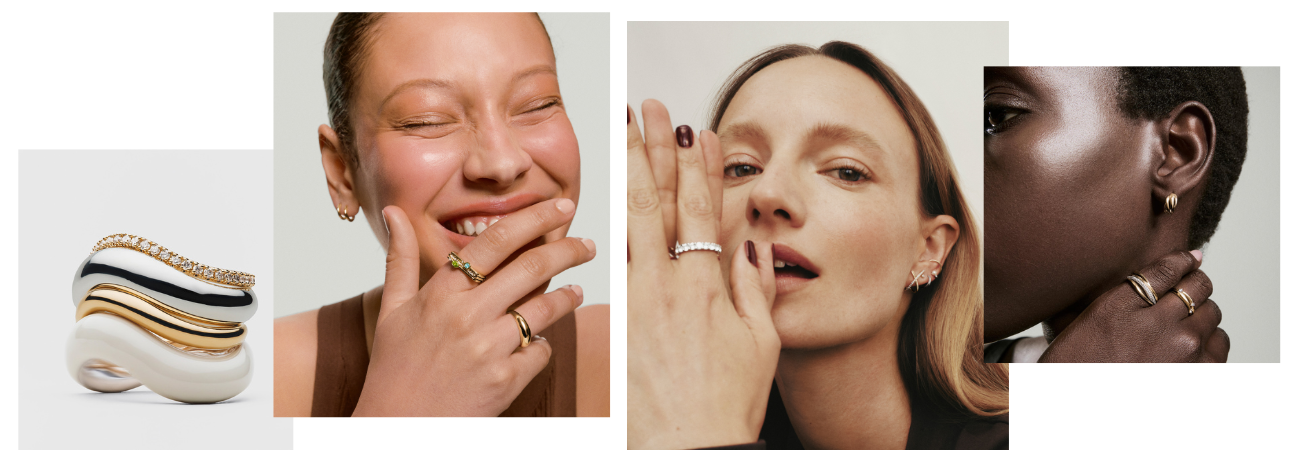
At this year’s Positive Luxury Awards 2026, Mejuri was recognised as Jewellery Business of the Year – a reflection of its actions towards building a modern luxury brand grounded in responsibility, transparency and long-term thinking. In this interview, we speak with CEO and Co-founder, Noura Sakkijha, to explore the mindset shaping Mejuri’s growth. From rethinking what quality means in fine jewellery to embedding sustainability into every layer of the business, she shares the motivation behind their approach, what guides key decisions, and the lasting impact they aim to create for both people and the planet.
. . .
What inspired you to take part in the Positive Luxury Awards and what does this recognition mean to your brand and team?
We chose to take part in the Positive Luxury Awards because they set a high and credible bar for what responsible luxury should look like today. It is the kind of external benchmark we want to hold ourselves to as we grow. At Mejuri, sustainability has never been a separate initiative. It is embedded in how we design, source, and scale. From responsible sourcing to investing in regenerative materials like Salmon Gold™, these are long-term commitments. This recognition means a lot to the team because it reflects years of intentional work. It validates the direction we have taken, but more importantly, it reinforces something we have believed from the beginning. Building a business responsibly is what creates lasting value.
How does sustainability influence your business decisions and why is taking action so important to you?
Sustainability is part of how we define quality. It shows up in every decision, from the materials we choose to the partners we work with, to how we think about longevity. In fine jewellery, where materials have both environmental and human impact, that responsibility is not optional. It is foundational. It is also where innovation becomes critical, whether that is working with recycled metals, exploring regenerative sourcing like Salmon Gold™, or designing products meant to be worn for years. Ultimately, sustainability is tied to our purpose. We are creating pieces that people live in, so they need to feel responsible and relevant, not just today, but over time.
Following a challenging couple of years for many businesses, how have you upheld your approach to positive change and resilience?
In moments of uncertainty, it is easy to shift toward short-term thinking. We have taken the opposite approach. We have stayed anchored in our purpose and focused on making disciplined, long-term decisions. That means continuing to invest in the areas that matter – product, sourcing, and customer experience – while being thoughtful about how we grow. For us, resilience comes from consistency. Staying true to our values, especially when it is harder to do so, is what allows us to build something enduring.
How has your sustainability journey built trust with your consumers and added value internally?
Trust with our customers comes from consistency and transparency. We share how we source, where we are making progress, and where we still have work to do. That honesty builds a deeper relationship over time. Internally, sustainability creates clarity. It gives teams a shared standard for decision making and raises the bar for what good looks like across the business. It shifts sustainability from a constraint to a lens, one that leads to better, more intentional choices and ultimately stronger products.
For leaders who want to create lasting value, what becomes possible when sustainability is treated as an investment?
When sustainability is treated as an investment, it becomes a driver of long-term value. It strengthens trust, builds customer loyalty, and creates more resilient operations. It also unlocks innovation across materials, sourcing, and how you think about growth. Over time, that consistency compounds. You are not just building a business that performs, you are building one that people believe in.
DOWNLOAD THE 2026 WINNERS REPORT
< Back