DEVELOPING AND IMPLEMENTING SUSTAINABLE PROCUREMENT PROCESSES IN LUXURY DESIGN
PILLARS: GOVERNANCE
MATERIAL DRIVERS: SUSTAINABLE SOURCING
THE CHALLENGE
Allect Design Group, comprising Helen Green Design, Rigby & Rigby, and Lawson Robb, sought to establish itself as a sustainability leader in the luxury design industry. The challenge was to integrate sustainability into its operations while preserving the individual identity, heritage, and expertise of its brands. Allect aimed to deliver exceptional residences, and special commissions while promoting innovation, creativity, and excellence. However, balancing these ambitions with environmental responsibility and social accountability required a structured approach.
CONSIDERATIONS
Navigating sustainability required Allect Design Group to address several challenges. Managing complex supply chains involved the development of a Supplier Code of Conduct to ensure ethical practices and transparency. Incorporating circular economy principles into luxury design demanded balancing innovation with practicality, especially in minimising the environmental impact of materials and assembly processes. Additionally, setting ambitious carbon reduction targets, required significant investment in monitoring systems and advanced technologies like Carbon Capture & Storage (CCS). Finally, fostering employee engagement and well-being involved creating accessible tools, training programs, and cultivating a culture of responsibility that aligned with the group’s sustainability goals.
APPROACH & ACTIONS
Positive Luxury supported Allect in developing an ESG strategy that aligns with its mission of promoting creativity and excellence. Key initiatives included:
- Supplier Code of Conduct: Allect implemented a code addressing anti-corruption, human rights, labour conditions, whistleblowing, privacy, and confidentiality, ensuring ethical practices across its supply chain.
- Sustainable Procurement Strategy: The group prioritised local sourcing and minimised materials with high environmental impact by incorporating circularity principles into its operations.
- SDG Alignment: Allect formalised its commitment to UN Sustainable Development Goals (SDG 12 and 13), focusing on responsible consumption and production and climate action. This included monitoring its carbon footprint and investing in Carbon Capture & Storage (CCS) technology.
- Transparency through Reporting: Allect introduced an annual ESG report that disclosed key goals for 2030 – reducing carbon footprint, waste, and increasing community involvement
RESULT
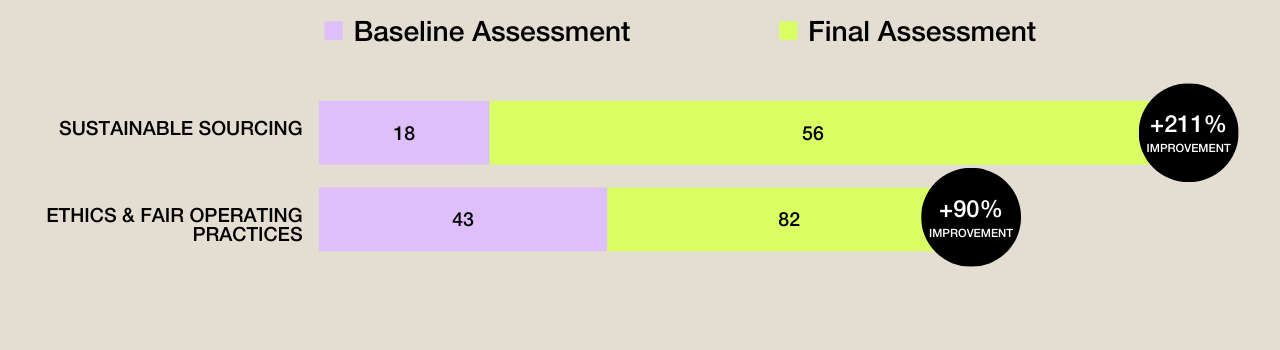
Allect Design Group’s work on improving their sustainable sourcing strategy, ethics, and fair operating practices, and waste management by incorporating a supplier code of conduct, has allowed the brand to establish a detailed framework for sustainability that supports their brands’ charitable partnerships. This strategic alignment has created a deeper understanding of sustainability across the organisation, enabling Allect to establish clear objectives for environmental impact reduction and monitor progress effectively.
LEARN MORE ABOUT ALLECT DESIGN GROUP
< Back