Media Centre
The latest media coverage of Positive Luxury and the Butterfly Mark.
Recent Coverage
Browse the latest media coverage of Positive Luxury and the Butterfly Mark. For information or interviews contact us at presscontact@positiveluxury.com
In The Loop: Redefining luxury beauty – nature-positive brands leading the way
20/03/2024




Garrard revolutionises the fine jewellery market with rental service
17/08/2023
The luxury Irish beauty brands you should know and the 12 products you should buy.
27/08/2023
Dior at Harrods again; AK Retail buys Evans; plus Selfridges, Manscaped, Monica Vinader
07/08/2023

The Home House Collection becomes the first private members’ club group to attain leading sustainability certification by Positive Luxury
02/08/2023



Luxury Briefing: Are luxury products ‘sustainable by nature,’ like Antoine Arnault said?
05/07/2023
UK-based business becomes first dedicated children’s jewellery brand to achieve Butterfly Mark
14/06/2023
Collaboration proving ‘essential’ to effective ESG efforts: Positive Luxury
23/05/2023

Female Disruptors: Diane Verde Nieto of Positive Luxury On The Three Things You Need To Shake Up Your Industry
23/04/2023


‘THESE ARE MORE STORIES OF HOPE’: AMY NELSON-BENNET ON THE POSITIVE LUXURY AWARDS 2023
22/03/2023

Social Impact Heroes Helping Our Planet: Why & How Diana Verde Nieto Of Positive Luxury Is Helping To Change Our World
06/03/2023
Montblanc engages in climate justice through 'Dear Future' initiative
27/01/2023

Bav Tailor shortlisted for Social Innovator of the Year at Positive Luxury Awards 2023
30/01/2023
Positive Luxury interview: biodiversity is the 'new black'; ignoring eco is a business risk
19/01/2023


Proving you really are: how to respond to beauty's greenwashing problem
25/07/2022
Opaque supply chains, unsustainable production practices bedevil hard luxury
24/12/2022
Nearly one third of all fine jewellery purchase considerations will include ESG by 2025
11/10/2022

For sustainability professionals, is the luxury sector the place to be right now?
23/08/2022
Industry promises green mindset but remains dedicated follower of fashion
08/07/2022
Future of beauty is built on innovation, inclusion: Positive Luxury
06/06/2022
Spending on luxury goods in Africa is expected to continue growing alongside the explosion of ultra-high net worth.
18/02/2022
Sustainability requires brands to be proactive, transparent: Positive Luxury
13/01/2022



Bankers, Investors and Consumers Tell Brands: ‘Go Green or Go Home’
29/09/2021
Dieci anni per costruire la leadership del futuro nel lusso, guidata dalla sostenibilità
Introducing the amazing panel of judges for our first ever Marie Claire Sustainability Awards
25/05/2021
Press Releases
The latest press releases from Positive Luxury. For information or interviews contact us at press@positiveluxury.com
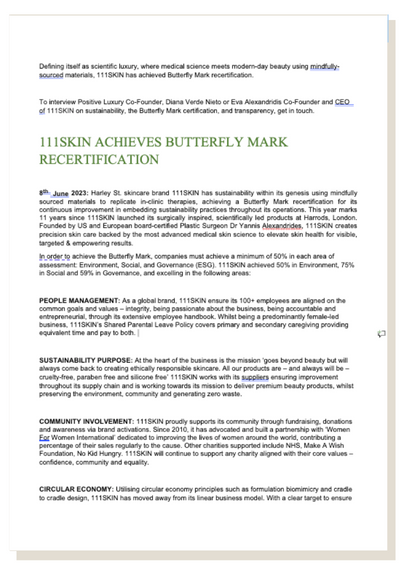
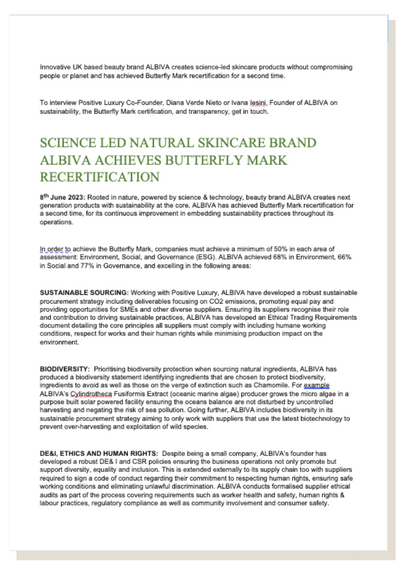
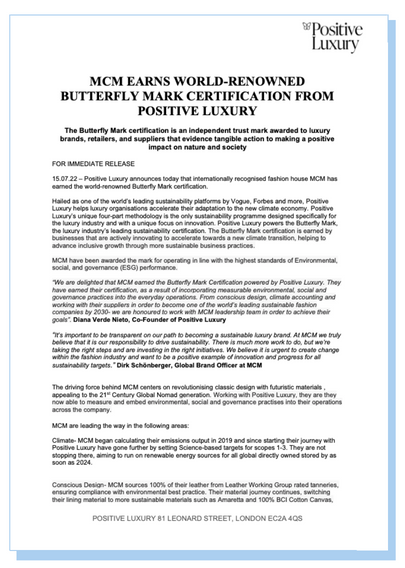
SCIENCE LED NATURAL SKINCARE BRAND ALBIVA ACHIEVES BUTTERFLY MARK RECERTIFICATION
08/06/2023
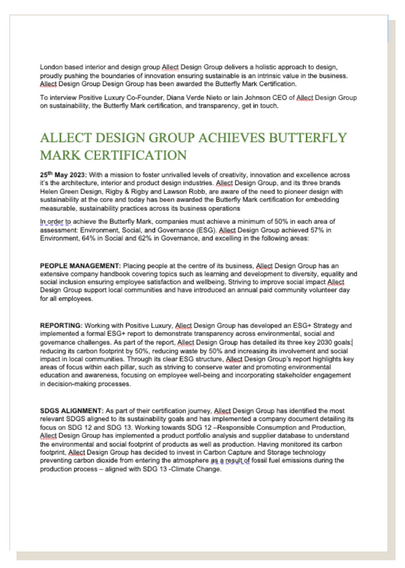
FINE JEWELLERY BRAND ANNE SISTERON ACHIEVES PRESTIGIOUS BUTTERFLY MARK CERTIFICATION
20/06/2023
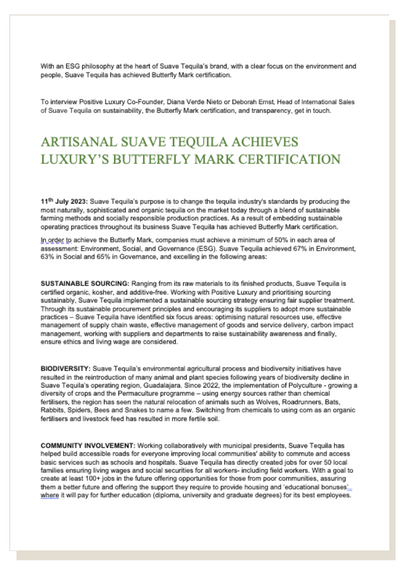
SCOTLAND’S OLDEST WORKING DISTILLERY, THE GLENTURRET, ACHIEVES BUTTERFLY MARK CERTIFICATION
12/04/2023
LIMELIGHT DIAMONDS IS AWARDED THE BUTTERFLY MARK – First Indian Lab-Grown Diamond Brand
05/04/2023
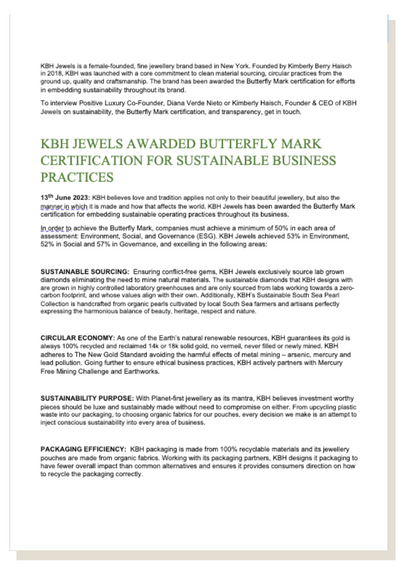
KBH JEWELS AWARDED BUTTERFLY MARK CERTIFICATION FOR SUSTAINABLE BUSINESS PRACTICES
13/06/2023
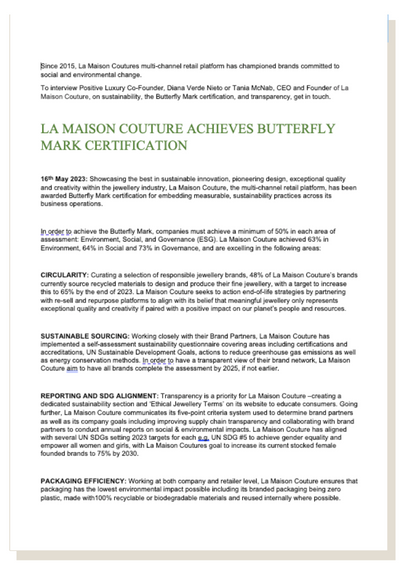
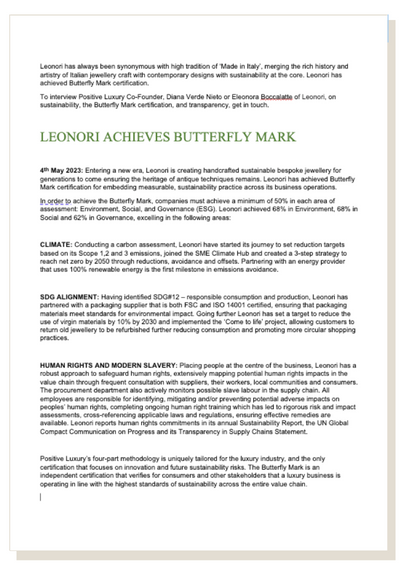
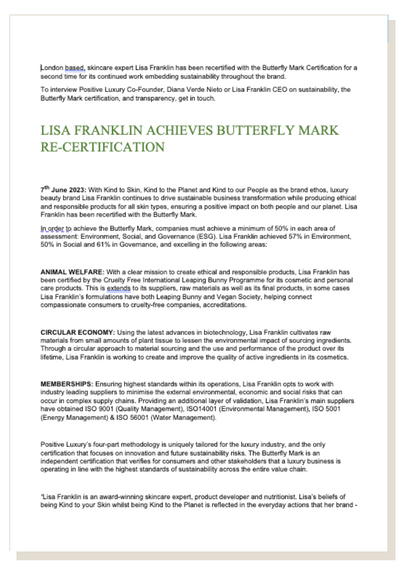
CHILDREN’S JEWELLERY BRAND, MOLLY BROWN LONDON ACHIEVES POSITIVE LUXURY’S BUTTERFLY MARK CERTIFICATION
14/06/2023
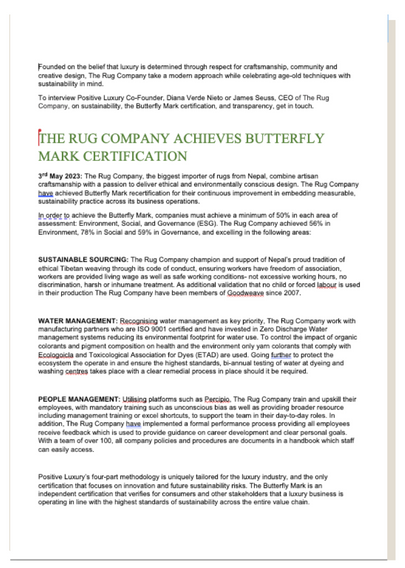
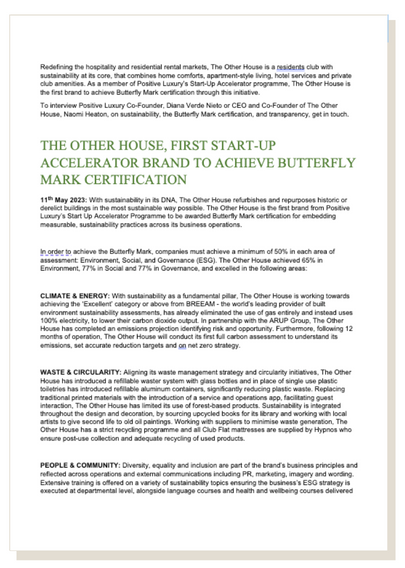
THE OTHER HOUSE, FIRST START-UP ACCELERATOR BRAND TO ACHIEVE BUTTERFLY MARK CERTIFICATION
11/05/2023
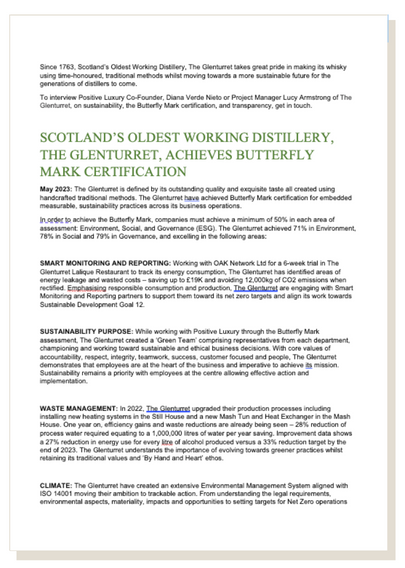
SCOTLAND’S OLDEST WORKING DISTILLERY, THE GLENTURRET, ACHIEVES BUTTERFLY MARK CERTIFICATION
01/05/2023
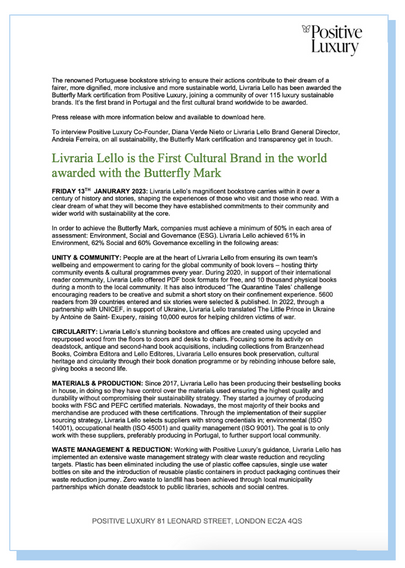
Livraria Lello is the First Cultural Brand in the world awarded with the Butterfly Mark
13/01/2023
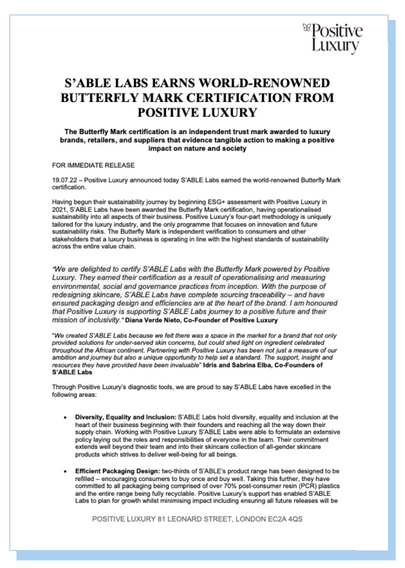
S’ABLE LABS EARNS WORLD-RENOWNED BUTTERFLY MARK CERTIFICATION FROM POSITIVE LUXURY
19/07/2022